Enter content here
Enter content here
Enter content here
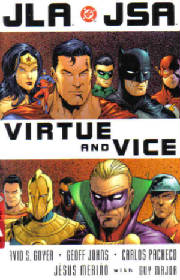
JLA/JSA: Virtue and Vice. DC Comics 2002. Writer by David S. Goyer and Goeff Johns. Penciled by Carlos Pacheco. Inked by Jesus Merino. Colorist: Guy Major. Classic JLA villain Despero and not-so-classic baddie Johnny Sorrow team up, take over President Lex Luthor's mind, and infect some of our heroes with the seven deadly sins as the world goes crazy and the combined forces of the Justice League and Justice Society have to take on not only the bad guys but the combined might of the seven renegade members. Green Lantern Kyle Radner, infected with envy, takes on Allan Scott [Green Lantern turned Sentinel] and there are other interesting battles along the way. Some of the heroes find themselves trapped in the Rock of Eternity and others are once more lost in Limbo. The premise is good, the story pulls one along, the art is generally clean and attractive, but this nevertheless misses classic status. Pacheco's work isn't bad at all, but rarely is it especially striking and his compositions, while miles ahead of some other artists, lack that certain dynamism. Still, this is an entertaining package for fans who missed those great JLA-JSA team-ups of the Silver Age.
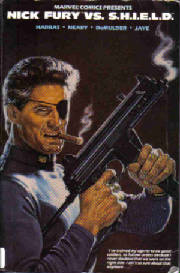
NICK FURY VS. S.H.I.E.L.D. Harras/Neary/DeMulder/Jaye. Marvel trade paperback. Nick Fury was first introduced into the Marvel Universe as the star of the World War 2 actioner Sgt. Fury and the Howling Commandos. To bring him into current super-hero Marvel continuity, he was made the head of an U.N.C.L.E.-like spy group called S.H.I.E.L.D. In the sixties and interacted with most of the Marvel Heroes, including the Fantastic Four and The Avengers, but especially Captain America. In this fascinating graphic novel Fury discovers that his mysterious bosses at Shield are working fist-in-glove with the likes of Hydra and AIM. When he asks one too many questions, he is soon arrested and relieved of his command then winds up on the run with conflicted Shield agents in pursuit. But why are so many of them acting so strangely, more like bad guys than good? Why does one agent show up alive when he was clearly killed in an earlier chapter? Why is Jimmy Woo aging at such a rapid extent, and why has Jasper Sitwell, who's taken over from Fury, become so evil? Before long Madame Hydra is involved in the whole mess, Fury takes on Shield and everyone else with the aid of only a couple of agents, his loyal old timers don't know which way to turn (including his lady love the Countess, who betrays him, more or less), and Fury's attempt to find answers and clear his name takes him from the sewers under Grand Central Station all the way to the Orient. It turns out that the mastermind behind the whole plot was once a lowly LMD (Life Model Decoy), assigned to mundane tasks, who developed ambition and intelligence and began taking over from behind the scenes [what a great idea!]. The personality cores (but apparently not the true soul or consciousness) of many agents have been transformed into sophisticated but more or less human duplicates which age too rapidly. The reason agents have been ordered to capture but not kill Fury is because the LMD needs an "infinity factor" in Fury's blood that has retarded his aging for so many decades (there's no mention of the story wherein he jealously battles a youthful Captain America) to administer to his dupes. Fury saves the day at the end but is shattered by the revelations that most of his life has been a lie, and his whole organization was corrupted to the core, good people in power replaced by the LMD's rapidly deteriorating duplicates. [The former LMD - he is now essentially human - plans to replace government and business leaders with duplicates as well so that he can rule the world.] Very well-written, highly entertaining and well-paced story holds the attention all the way through. Best to be read in one sitting. Bob Harras has written a great story and Paul Neary's pencils under Kim DeMulder's inks, while not first-rate, are serviceable and occasionally better than that.